 Save to Pinterest
 My neighbor Jin knocked on my door one Thursday evening holding a grocery bag and a wok. She said her kitchen sink had backed up mid-dinner and asked if she could finish cooking at my place. Twenty minutes later, my apartment smelled like a street market in Seoul, and I was scribbling notes on a napkin while she tossed noodles with one hand and told stories with the other. That night, I learned that the best recipes come with interruptions, laughter, and a little bit of chaos.
I made this for my brother the weekend he moved into his first apartment. He had no furniture yet, so we sat on the floor with bowls balanced on cardboard boxes. He went back for thirds and said it tasted better than takeout, which might have been the empty fridge talking, but I took the compliment anyway. Now every time he visits, he asks if I still have that recipe, and I remind him he has the napkin I wrote it on.
Ingredients
- Rice noodles: They turn silky and slippery when cooked, and they soak up the sauce without getting mushy if you drain them right away.
- Flank steak: Slicing it thin against the grain keeps it tender, and browning it fast over high heat locks in the juices.
- Broccoli florets: They add a slight bitterness that balances the sweet glaze, and they stay crisp if you do not overcook them.
- Bell pepper: Red or yellow gives you a pop of color and a hint of sweetness that plays well with the soy sauce.
- Carrot: Julienned strips cook quickly and add a gentle crunch that contrasts with the soft noodles.
- Green onions: Chopped and scattered on top, they bring a fresh, sharp bite that wakes up the whole dish.
- Garlic and ginger: Minced and grated, they perfume the oil and give the skillet that unmistakable warm, spicy aroma.
- Soy sauce: The salty backbone of the sauce, it deepens every other flavor in the bowl.
- Brown sugar: It melts into the soy sauce and creates a glossy coating that clings to the beef and vegetables.
- Sesame oil: A few drops add a nutty richness that lingers on your tongue after each bite.
- Vegetable oil: High smoke point means you can crank the heat without burning anything.
- Sesame seeds: Toasted and sprinkled on top, they add a quiet crunch and a hint of elegance.
Tired of Takeout? 🥡
Get 10 meals you can make faster than delivery arrives. Seriously.
One email. No spam. Unsubscribe anytime.
Instructions
- Soften the noodles:
- Cook the rice noodles according to the package directions, then drain them immediately and rinse with cool water to stop the cooking. This keeps them from clumping into a sticky mass.
- Sear the beef:
- Heat the vegetable oil in a large skillet or wok over medium-high heat until it shimmers, then add the sliced flank steak in a single layer. Let it sit for a minute before stirring so it gets a nice brown crust, then cook for another minute or two and remove it to a plate.
- Bloom the aromatics:
- Drop the minced garlic and grated ginger into the hot skillet and stir constantly for about thirty seconds. You will smell it the moment it turns fragrant, and that is your cue to move on before it burns.
- Stir-fry the vegetables:
- Add the broccoli, bell pepper, and carrot to the skillet and toss them every thirty seconds or so for about five minutes. They should be tender but still have a bit of snap when you bite into them.
- Mix the sauce:
- While the vegetables cook, whisk together the soy sauce, brown sugar, and sesame oil in a small bowl until the sugar dissolves completely. The sauce should look glossy and smell sweet and salty at the same time.
- Reunite the beef:
- Return the browned beef to the skillet along with any juices that collected on the plate, then pour the sauce over everything. Stir gently so the beef and vegetables get coated evenly.
- Toss in the noodles:
- Add the drained rice noodles to the skillet and use tongs to lift and fold everything together until the noodles are evenly coated and warmed through, about two minutes. Be gentle so the noodles do not break apart.
- Garnish and serve:
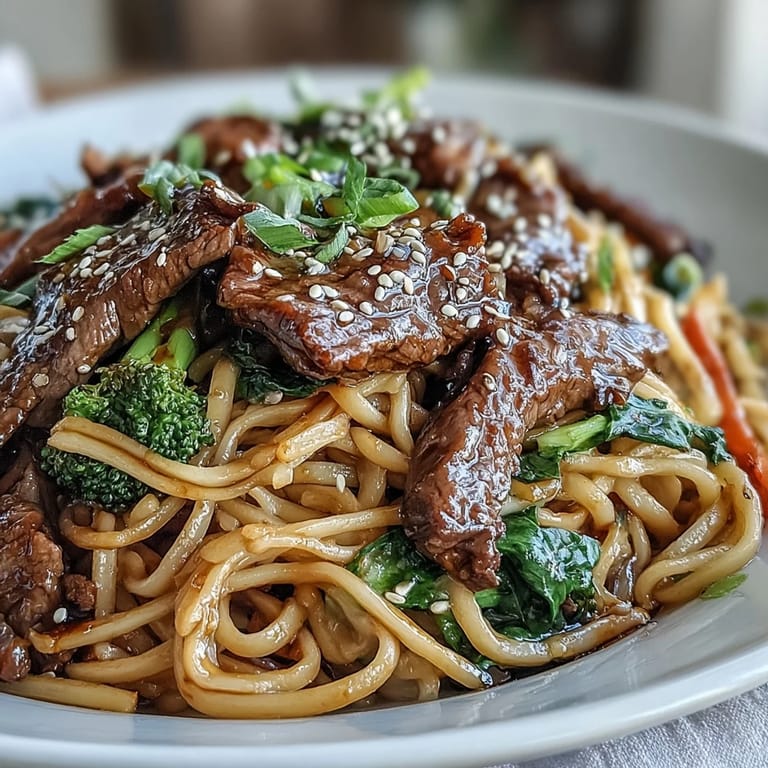
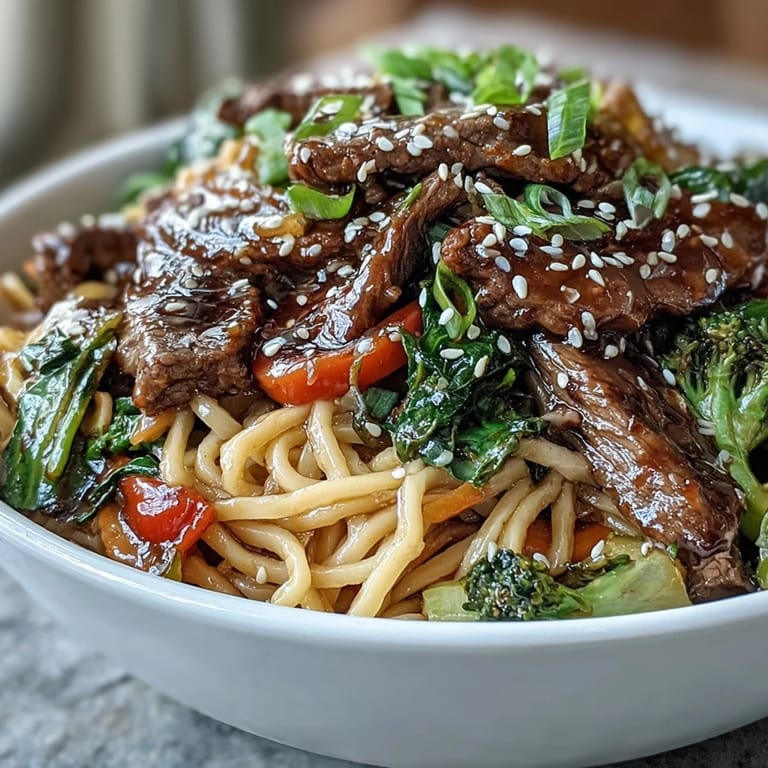
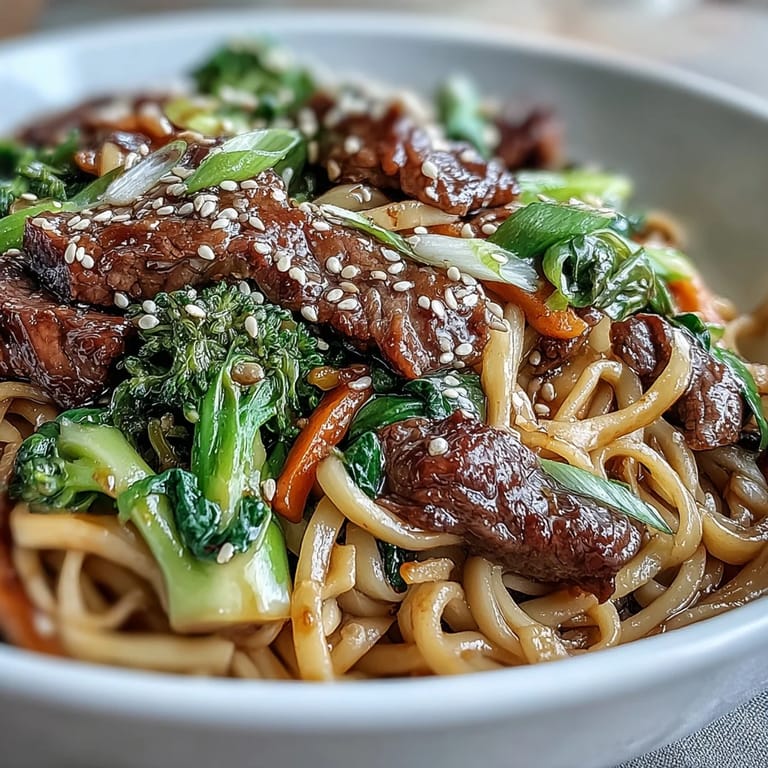
- Transfer everything to a serving bowl or divide among individual plates, then scatter chopped green onions and sesame seeds over the top. Serve immediately while the noodles are still glossy and the vegetables are hot.
 Save to Pinterest
 My friend Sam brought her kids over one Saturday afternoon, and her youngest, who claimed he hated vegetables, ate an entire bowl of this without complaint. Halfway through, he looked up and asked if broccoli always tasted like that, and his mom just smiled at me across the table. Sometimes the best compliment is a clean bowl and a confused question.
Swapping Ingredients
I have made this with chicken thighs, shrimp, and even crispy tofu when my vegetarian cousin visited. The sauce works with anything, and the cooking time barely changes. If you use chicken, slice it thin and cook it a minute longer than the beef. Shrimp only needs two minutes total, and tofu should be pressed dry and pan-fried until the edges turn golden before you add it at the end. Snap peas and zucchini are great vegetable swaps, and they cook just as fast as the broccoli.
Adding Heat
The first time I made this, I stirred in a spoonful of gochujang because I missed the heat Jin had added that night in my kitchen. It turned the sauce a deep red and gave it a smoky, fermented kick that made my eyes water in the best way. If you do not have gochujang, sriracha works too, but start with half a tablespoon and taste before you add more. The sweetness of the brown sugar tames the spice just enough that it warms your throat without overwhelming the other flavors.
Storing and Reheating
Leftovers keep in an airtight container in the fridge for up to three days, and they taste even better the next day once the noodles have soaked up more of the sauce. I reheat mine in a skillet over medium heat with a splash of water to loosen everything up, stirring gently until it is warmed through. The microwave works in a pinch, but the noodles can get a little rubbery, so I always add a teaspoon of water and cover the bowl with a damp paper towel to trap the steam.
- If the noodles seem dry after storing, toss them with a drizzle of sesame oil before reheating.
- You can freeze individual portions in freezer bags for up to a month, but the vegetables lose some of their crunch.
- Cold leftovers make a surprisingly good lunch straight from the fridge if you are in a hurry.
 Save to Pinterest
 Every time I make this, I think about Jin standing in my kitchen, laughing at my dull knife and teaching me how to slice beef properly. Food has a way of carrying people with it, even when they are not in the room anymore.
Common Questions
- → What cut of beef works best?
Flank steak sliced thinly against the grain ensures tenderness. Sirloin or skirt steak are excellent alternatives.
- → Can I make this spicy?
Yes, add sriracha or gochujang to the sauce for a spicy kick that complements the Korean flavors.
- → How do I prevent mushy noodles?
Cook rice noodles according to package directions, drain immediately, and add them last to avoid overcooking.
- → What vegetables can I substitute?
Snap peas, zucchini, mushrooms, or baby corn work beautifully in this stir-fry for added variety.
- → How long do leftovers keep?
Store in an airtight container in the refrigerator for up to 3 days. Reheat gently to maintain texture.
- → Is this dish gluten-free?
Use gluten-free soy sauce (tamari) and certified gluten-free rice noodles to make this completely gluten-free.