 Save to Pinterest
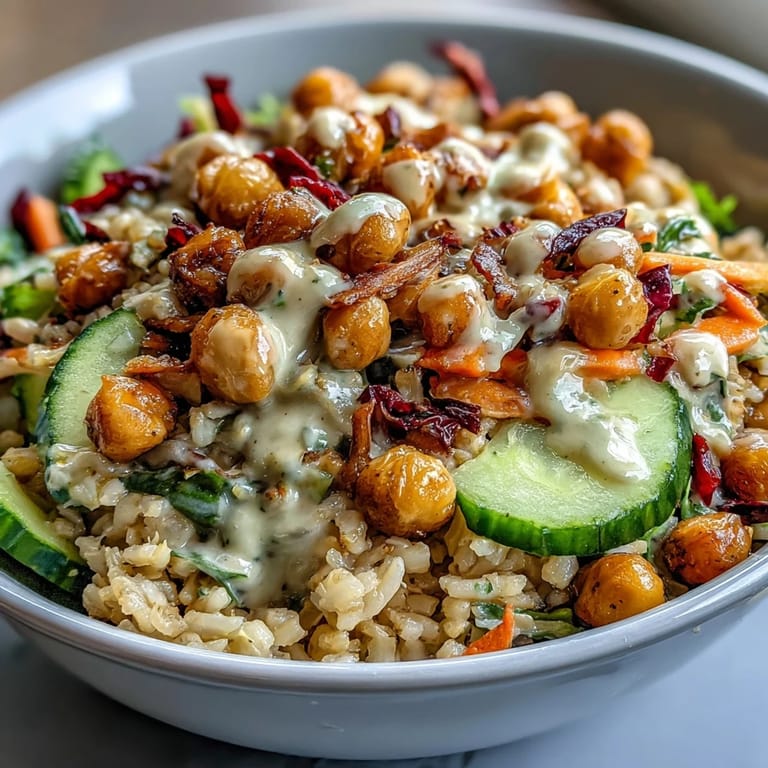
 There's something deeply satisfying about assembling a bowl that looks like it belongs in a magazine spread but tastes like comfort in every bite. I discovered this peanut chickpea rice bowl on a Tuesday afternoon when I was tired of the same rotation and wanted something that felt both indulgent and genuinely good for me. The first time I made it, I underestimated how the warm rice would soften the raw vegetables just enough, and how a simple peanut dressing could transform everything into something greater than its parts. That bowl became my go-to lunch, then my dinner, then the thing I'd pack for friends who said they were too busy to eat well.
I made this for my sister when she went vegan, and I remember her skeptical expression turning into genuine surprise as she took her first bite. She kept asking if the dressing was store-bought because it tasted too polished, too intentional, and I loved being able to say, 'No, it's just five minutes and a bowl.' Now she texts me photos of her versions with different vegetable swaps, and somehow that matters more than any compliment.
Ingredients
- Brown rice: Use the ratio of one part rice to two parts water, and don't skip the rinsing step because it removes excess starch and helps each grain stay separate and tender.
- Cooked chickpeas: If using canned, drain and rinse thoroughly to remove the metallic taste and excess sodium that can muddy the whole bowl.
- Roasted unsalted peanuts: Buy them unsalted so the dressing flavors aren't competing with salt, and choose roasted over raw for a deeper, sweeter crunch.
- Shredded carrot and red cabbage: The raw vegetables stay crisp and add visual contrast, plus the slight bitterness of cabbage balances the richness of peanut butter beautifully.
- Cucumber and scallions: Slice these just before assembly so they stay crisp and don't weep into the other vegetables.
- Fresh cilantro: It's optional but worth seeking out because it adds a herbal brightness that makes the whole bowl feel fresh instead of heavy.
- Creamy peanut butter: Use the kind with just peanuts and salt, not the kind with added sugar or oils, so the dressing stays balanced and silky.
- Soy sauce: This is your seasoning backbone, so don't skimp on quality, and if you're feeding gluten-free guests, swap tamari without second-guessing the flavor.
- Maple syrup or honey: Either works, but maple adds a deeper note while honey is more neutral, so choose based on what other flavors you're leaning into.
- Rice vinegar or lime juice: The acid cuts through the richness of peanut butter and keeps the whole bowl from feeling one-dimensional.
- Sesame oil: Use it sparingly because the flavor is intense and beautiful, and a little goes a long way in the dressing.
- Fresh ginger and garlic: Grate the ginger finely so it distributes evenly, and mince the garlic small because raw garlic can surprise you with its punch if it's left in chunks.
- Chili flakes: Optional but recommended because they add warmth and complexity that makes people ask what that subtle tingle is.
Tired of Takeout? 🥡
Get 10 meals you can make faster than delivery arrives. Seriously.
One email. No spam. Unsubscribe anytime.
Instructions
- Rinse and start your rice:
- Rinse the brown rice under cold water until the water runs mostly clear, which takes about a minute of gentle agitation. This removes the starch coating that would otherwise make your rice gummy and stuck together.
- Build your cooking water:
- Pour water into a medium saucepan, add salt, and bring it to a boil so the rice cooks in seasoned water rather than bland liquid. The salt enhances the natural flavor of the rice and prevents it from tasting flat.
- Combine and simmer:
- Add the rinsed rice to the boiling water, stir once, then cover and reduce heat to low. This initial stir prevents sticking, and the cover traps steam that cooks the rice evenly without you having to fuss with it.
- Make your dressing while rice cooks:
- In a small bowl, whisk together peanut butter, soy sauce, maple syrup, rice vinegar, sesame oil, ginger, and garlic until combined. The whisking creates a smooth base, and then add warm water one tablespoon at a time until the dressing loosens to a pourable consistency that coats a spoon.
- Prepare your vegetables:
- Shred the carrot and cabbage using a grater or vegetable shredder, slice the cucumber into thin half-moons, thinly slice the scallions, and roughly chop cilantro if you're using it. Doing this while the rice finishes means everything's ready when you need it, and the vegetables stay crisp because they're not sitting around getting soft.
- Check your rice and finish cooking:
- After 30 to 35 minutes, peek at the rice and check that the water is absorbed and the grains are tender but not mushy. Once it reaches that sweet spot, remove from heat, let it stand covered for 5 minutes, then fluff with a fork to separate the grains.
- Assemble your bowls:
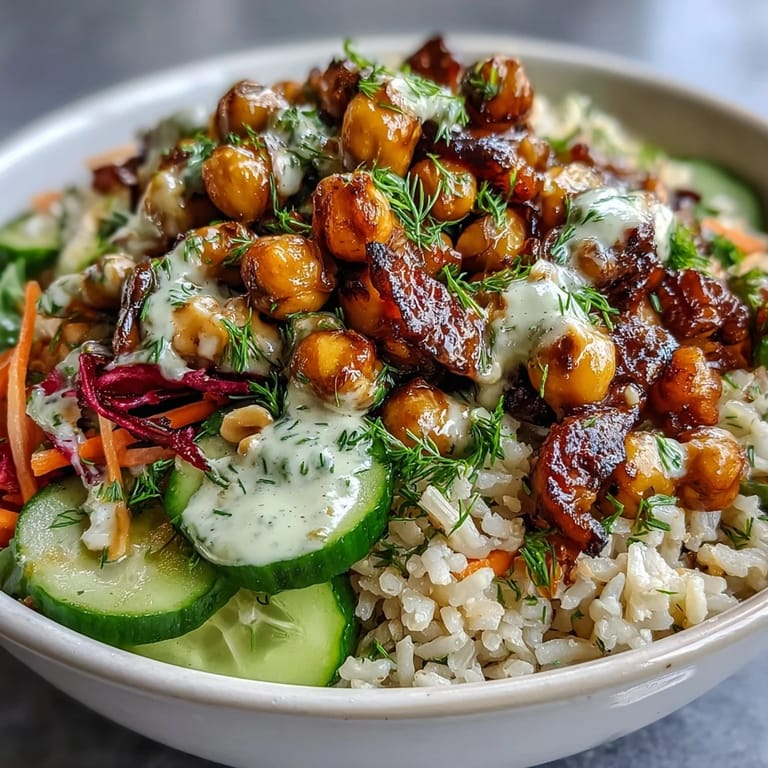
- Divide the warm rice among four bowls, and top each with chickpeas, peanuts, shredded carrot, cabbage, cucumber, and scallions in whatever arrangement makes you happy. The warm rice will soften the raw vegetables slightly while keeping them from becoming completely wilted, which is exactly the texture you want.
- Dress and serve:
- Drizzle the peanut dressing generously over each bowl, scatter extra cilantro and peanuts on top if you're feeling fancy, and serve immediately while the rice is still warm. You can also refrigerate these bowls and eat them cold the next day, which is honestly when they taste even better because the flavors have time to meld.
 Save to Pinterest
 My favorite moment with this bowl came when my ten-year-old nephew built his own version and actually said the vegetables tasted better raw than cooked, and I realized he was right. Food that lets people participate and adjust it to what they want feels less like eating and more like choosing, and that small difference changes everything about how the meal feels.
The Magic of the Peanut Dressing
The dressing is where this bowl lives and breathes, and I've learned that treating it with intention is the difference between a mediocre bowl and one that people ask you to make again. Most people assume a peanut dressing is just peanut butter thinned with liquid, but the layers of soy sauce, ginger, garlic, and a touch of sweetness create something that feels more sophisticated than the sum of its parts. I've seen people who claim they don't like peanut butter fall in love with this dressing because the acid and salt prevent it from being cloying, and the sesame oil adds a richness that makes you think about every spoonful.
Vegetables as the Foundation
The raw vegetables in this bowl are not an afterthought or a way to seem healthy, they're the reason this dish works as a complete thought. The sweetness of shredded carrots plays against the slight bitterness of red cabbage, the cucumber adds a cooling crispness that prevents the bowl from feeling too rich, and the scallions add a sharp note that wakes up your palate between bites. I've experimented with swapping in bell peppers, fresh snow peas, and even shredded beets, and while the combinations all work, there's something about this specific arrangement that feels intentional and balanced.
Storage, Variations, and Serving Ideas
These bowls are genuinely better when assembled fresh, but I've found that if you keep the components separate and assemble them in the morning, they hold up well through lunch. The rice stays tender, the vegetables maintain their crunch if they're not drowning in dressing, and you can add the peanut dressing right before eating so nothing gets soggy or weeping. I often make a big batch of dressing on Sunday and portion out prepped vegetables so lunch throughout the week feels effortless and intentional.
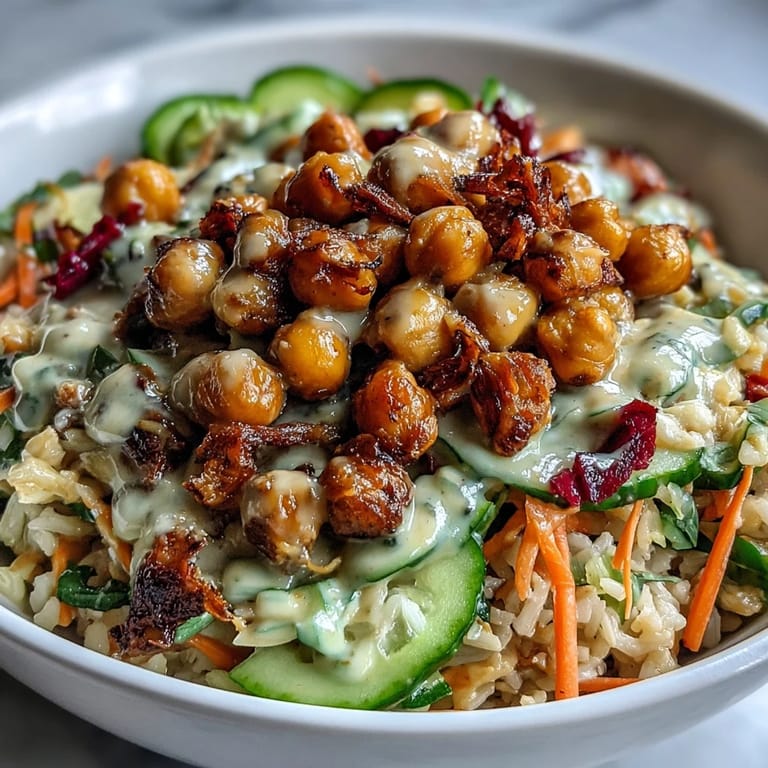
- If you want to roast the chickpeas for a crunchier texture, toss them with smoked paprika and a little oil, then roast at 425 degrees for about 15 minutes until they're golden and crispy on the outside.
- Add a soft-boiled egg or tofu to turn this into a complete protein powerhouse that keeps you full for hours.
- If you're making this cold, let the rice cool completely before assembling so the warm rice doesn't wilt the vegetables before you're ready to eat.
 Save to Pinterest
 This bowl has become more than a recipe in my kitchen, it's become a way to feed myself and people I care about without overthinking it. There's real freedom in knowing you can make something nourishing and delicious in under an hour, and that freedom tastes like hope.
Common Questions
- → Can I make this bowl gluten-free?
Yes, simply substitute regular soy sauce with tamari or coconut aminos in the peanut dressing. All other ingredients are naturally gluten-free, making this an easy meal to adapt for dietary restrictions.
- → How long does the peanut dressing last?
The homemade peanut dressing keeps well in an airtight container in the refrigerator for up to one week. You may need to whisk in a small amount of warm water before using again, as it tends to thicken when chilled.
- → Can I use other grains instead of brown rice?
Absolutely. Quinoa, farro, jasmine rice, or even cauliflower rice work beautifully in this bowl. Adjust cooking times accordingly and aim for grains that complement the Asian-inspired peanut flavors.
- → Is this bowl good for meal prep?
Excellent for meal prep. Store the cooked rice, vegetables, chickpeas, and dressing in separate containers. The bowl stays fresh for 3-4 days refrigerated—just assemble and drizzle with dressing when ready to eat.
- → What vegetables work best in this bowl?
The original calls for carrots, cabbage, and cucumber for crunch and color, but bell peppers, edamame, snap peas, shredded Brussels sprouts, or spinach all work wonderfully. Choose vegetables that hold their texture well when dressed.
- → Can I add protein beyond chickpeas?
While chickpeas provide 15 grams of protein per serving, you can add grilled tofu, tempeh, shredded chicken, or even a fried egg on top. The peanut dressing pairs well with most proteins.