 Save to Pinterest
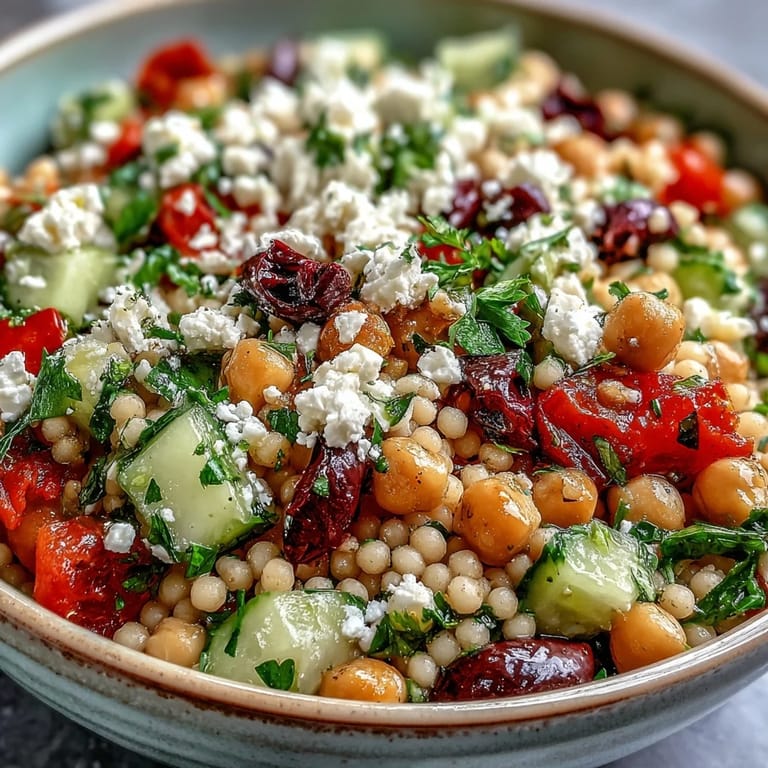
 My neighbor knocked on the door one evening holding a bowl covered with foil, and what she handed me changed how I thought about grain salads forever. It was pearl couscous, not the fluffy kind I grew up with, but these little toasted pearls that had soaked up lemon and olive oil and somehow stayed chewy and satisfying even after sitting in her fridge all day. She told me she made it every Sunday and ate it cold straight from the container for lunch all week, and I believed her because it tasted like something you'd crave at noon on a Wednesday.
I started bringing this to potlucks after a friend with a toddler told me she loved that it had no mayo, no wilting lettuce, and could sit out on a picnic table without anyone worrying. She was right, and I watched people go back for seconds even after it had been sitting in the sun for an hour. There's something about the way the oregano settles into the couscous and the feta gets a little soft around the edges that makes it taste like it was meant to be eaten outdoors.
Ingredients
- Pearl couscous: These little orbs toast up with a nutty flavor and hold their shape no matter how much you toss them, unlike regular couscous that can turn to mush.
- Vegetable broth: Cooking the couscous in broth instead of water gives every single pearl a baseline of flavor you can taste in every bite.
- Red bell pepper: The sweet crunch cuts through the brininess of the olives and adds color that makes the bowl look like summer.
- Cucumber: Diced small, it stays crisp and adds a cool freshness that balances the richness of the olive oil and feta.
- Cherry tomatoes: Halved so their juice mingles with the dressing, they bring a slight acidity that wakes everything up.
- Red onion: Finely chopped so you get little bursts of sharpness without overpowering the gentler flavors around it.
- Kalamata olives: Their deep, salty flavor is the backbone of the Mediterranean vibe, and chopping them helps distribute that brine.
- Feta cheese: Crumbled so it melts slightly into the warm couscous or stays creamy if you add it cold, either way it's essential.
- Fresh parsley: Chopped and folded in last, it adds a green brightness that makes the whole bowl taste alive.
- Olive oil: The base of the dressing, it coats every ingredient and carries the oregano everywhere it needs to go.
- Red wine vinegar: Just enough tang to make your taste buds pay attention without making the salad taste pickled.
- Dried oregano: This is what makes it smell and taste unmistakably Mediterranean, earthy and a little floral.
Tired of Takeout? 🥡
Get 10 meals you can make faster than delivery arrives. Seriously.
One email. No spam. Unsubscribe anytime.
Instructions
- Boil the broth and add couscous:
- Bring the vegetable broth to a rolling boil in a medium saucepan, then stir in the pearl couscous and listen for that gentle simmer as it settles in. The broth should just cover the grains.
- Simmer until tender:
- Lower the heat, cover the pot, and let it cook for about 10 minutes, stirring now and then so nothing sticks to the bottom. The couscous is done when it's tender but still has a little chew, and the liquid is completely absorbed.
- Cool the couscous:
- Spread the cooked couscous onto a baking sheet in an even layer so it cools faster and stops cooking. Let it sit for 10 minutes, and don't skip this or the heat will wilt your vegetables.
- Prep the vegetables:
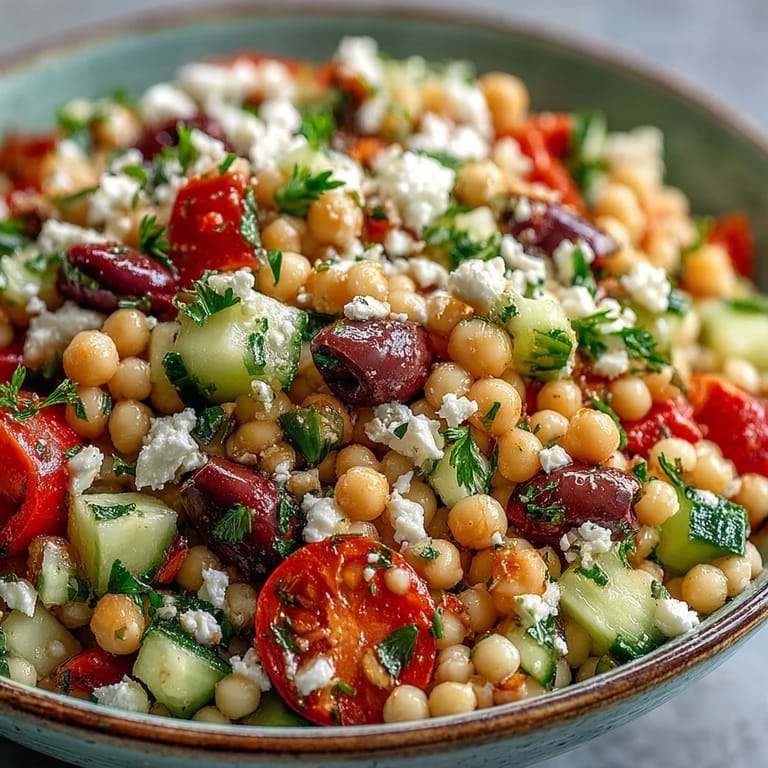
- While the couscous cools, toss the diced bell pepper, cucumber, tomatoes, red onion, olives, and feta into a large mixing bowl. The colors alone will make you hungry.
- Whisk the dressing:
- In a small bowl, whisk together the olive oil, red wine vinegar, oregano, salt, and pepper until it's smooth and emulsified. Taste it on your finger, it should be bold because it has a lot of ingredients to season.
- Combine and toss:
- Add the cooled couscous to the bowl with the vegetables, pour the dressing over everything, and toss gently with a big spoon until every pearl is coated. Be gentle so the feta doesn't turn to mush.
- Finish and rest:
- Fold in the chopped parsley, taste, and add more salt or pepper if it needs it. Serve it right away or cover and refrigerate for 30 minutes to let the flavors get to know each other.
 Save to Pinterest
 The first time I made this for a backyard dinner, I set the bowl on the table and forgot about it while we grilled. An hour later, someone pointed out that it was almost empty, and I realized it had quietly become the thing everyone kept reaching for between bites of everything else. It wasn't trying to be the star, but it was the dish that made people feel good, and that's when I knew it was a keeper.
Serving Suggestions
This works warm as a side next to grilled lamb or chicken, or cold straight from the fridge as a packed lunch that doesn't need reheating. I've eaten it as breakfast with a fried egg on top, and I've served it as a base for roasted vegetables when I wanted something more filling. It's one of those recipes that adapts to whatever your day needs without asking you to do much.
Make It Your Own
If you have artichoke hearts in the pantry, chop them up and toss them in for extra brininess and texture. Roasted red peppers add a smoky sweetness that changes the whole flavor, and chickpeas turn it into a protein-packed meal that'll keep you going all afternoon. I've also swapped the parsley for mint when I had it growing on the windowsill, and it made the bowl taste brighter and almost summery even in October.
Storage and Leftovers
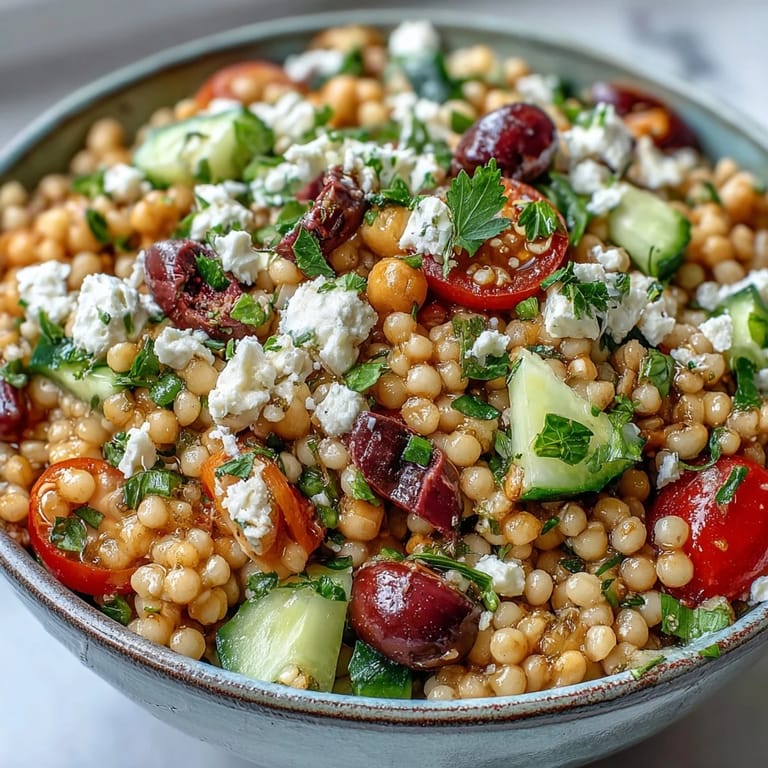
This keeps in an airtight container in the fridge for up to three days, and honestly, it tastes better on day two when the oregano has soaked into every grain. The vegetables stay crunchy longer than you'd expect, and the feta gets creamier as it sits in the dressing. If you're making it ahead, hold off on adding the parsley until just before serving so it stays bright green and fresh.
- Let it come to room temperature for 10 minutes before serving if you prefer it less cold.
- Add a drizzle of olive oil before serving leftovers to refresh the dressing.
- If the couscous seems dry after a day, a spoonful of water or broth stirred in will bring it back to life.
 Save to Pinterest
 There's a reason I keep coming back to this bowl, it's easy enough for a weeknight but interesting enough that it feels like you made an effort. Every time I toss it together, I'm reminded that the best recipes are the ones that get better the more you make them, not because you're perfecting them, but because they start to feel like home.
Common Questions
- → What is pearl couscous?
Pearl couscous, also known as Israeli couscous, consists of small toasted spheres of semolina wheat. Unlike traditional couscous, it has a larger, chewier texture and a subtle nutty flavor from toasting, making it perfect for absorbing vinaigrettes and holding up in mixed dishes.
- → Can I make this ahead of time?
Absolutely. This dish actually benefits from resting in the refrigerator for 30 minutes to several hours, allowing the vinaigrette to penetrate the couscous and flavors to meld. It stores well in an airtight container for up to 3 days.
- → How do I make it vegan?
Simply omit the feta cheese or substitute it with a plant-based feta alternative. The dish remains delicious and satisfying without dairy, thanks to the briny olives, fresh herbs, and zesty vinaigrette providing plenty of flavor.
- → What can I serve with pearl couscous?
This works as a standalone light lunch or side dish alongside grilled fish, chicken, or lamb. It also pairs beautifully with hummus and pita for a larger Mediterranean spread, or topped with roasted chickpeas for added protein.
- → Can I substitute the pearl couscous?
Quinoa makes an excellent gluten-free substitute with similar cooking properties. Regular couscous works too but has a lighter texture. Adjust cooking times according to package instructions for whichever grain you choose.
- → Why toast the couscous?
Toasting creates a golden color and enhances the couscous with a subtle nutty flavor that adds depth to the final dish. This step is often done during manufacturing, but additional toasting in a dry pan before adding liquid intensifies the flavor further.