 Save to Pinterest
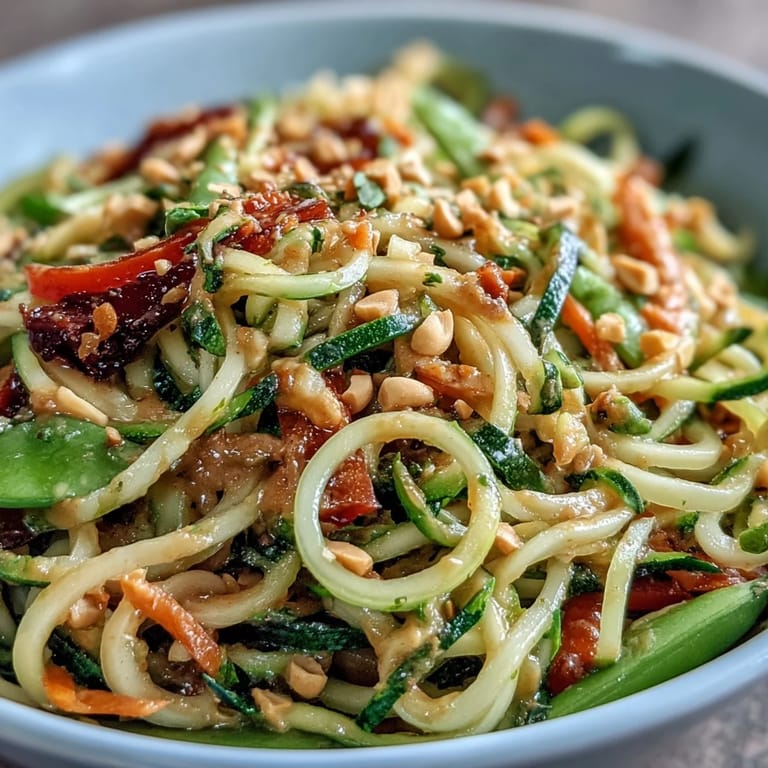
 My spiralizer sat unused in a kitchen drawer for months until one sweltering afternoon when I had a fridge full of zucchini and zero appetite for anything heavy. I threw together whatever vegetables I could find, whisked up a peanut sauce on instinct, and tossed it all together in under twenty minutes. The result was so bright and satisfying that I made it twice the next week, each time tweaking the sauce until I found the perfect balance of creamy, tangy, and just a whisper of heat.
I made this for a friend who was nervous about trying spiralized vegetables, convinced they'd taste nothing like real noodles. Watching her face when she tasted it, then immediately asked for seconds, reminded me that sometimes the best dishes are the ones that surprise you. She's made it at least a dozen times since, and swears it saved her through a busy season of work.
Ingredients
- Zucchini: Choose firm, medium-sized ones rather than oversized watery varieties; they hold their texture better when cooked briefly.
- Red bell pepper: The sweetness balances the tanginess of the sauce and adds a satisfying crunch if you don't overcook it.
- Carrot: Julienned thin means it cooks in the same time as everything else, adding natural sweetness and texture.
- Snap peas: These stay crisp through cooking and add a bright pop of color and freshness.
- Natural peanut butter: Use the kind with just peanuts and salt; the creamy stuff makes the sauce silkier than crunchy.
- Soy sauce or tamari: Tamari is the move if you're avoiding gluten, and it adds umami depth without overwhelming the other flavors.
- Rice vinegar: This subtle acidity is gentler than regular vinegar and doesn't overshadow the peanut flavor.
- Lime juice: Fresh lime is essential here; bottled won't give you that same brightness.
- Sesame oil: A little goes a long way; toasted sesame oil has a deeper, more assertive flavor than plain.
- Garlic and ginger: Mince the garlic fine and grate the ginger so they distribute evenly throughout the sauce without any harsh chunks.
Tired of Takeout? 🥡
Get 10 meals you can make faster than delivery arrives. Seriously.
One email. No spam. Unsubscribe anytime.
Instructions
- Prep your vegetables:
- Spiralize your zucchini and carrot first, then slice everything else. Having everything ready before you heat the pan is the secret to keeping this dish quick and preventing any vegetables from overcooking while you're still prepping others.
- Build your sauce:
- Whisk the peanut butter with soy sauce, rice vinegar, lime juice, and maple syrup until it starts to come together, then add the sesame oil, garlic, and ginger. Start with just 2 tablespoons of warm water and add more gradually until it's pourable but still thick enough to coat noodles.
- Get your pan hot:
- A large skillet or wok over medium-high heat is ideal; you want it hot enough that the vegetables sizzle when they hit the pan. A splash of sesame oil adds extra flavor, but it's optional if you prefer to keep it lighter.
- Cook the hardy vegetables first:
- Bell pepper, carrot, and snap peas need 2 to 3 minutes to become tender while keeping some snap. Toss them occasionally so they cook evenly and don't stick to the bottom.
- Add the zucchini noodles gently:
- Toss the spiralized zucchini in for just 2 to 3 minutes, being gentle so they don't break apart. This is the moment where timing matters most; any longer and you'll have mushy, watery noodles instead of the tender-crisp texture you want.
- Sauce and finish:
- Pour the peanut sauce over everything and toss until every noodle and vegetable is coated. One more minute of stirring ensures everything heats through and the sauce clings to the noodles.
- Plate and garnish:
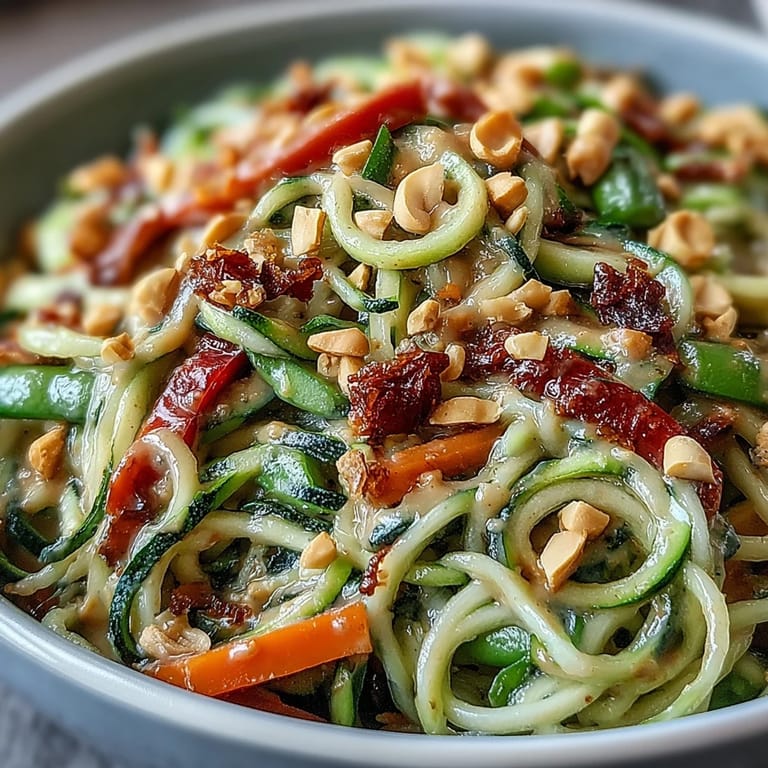
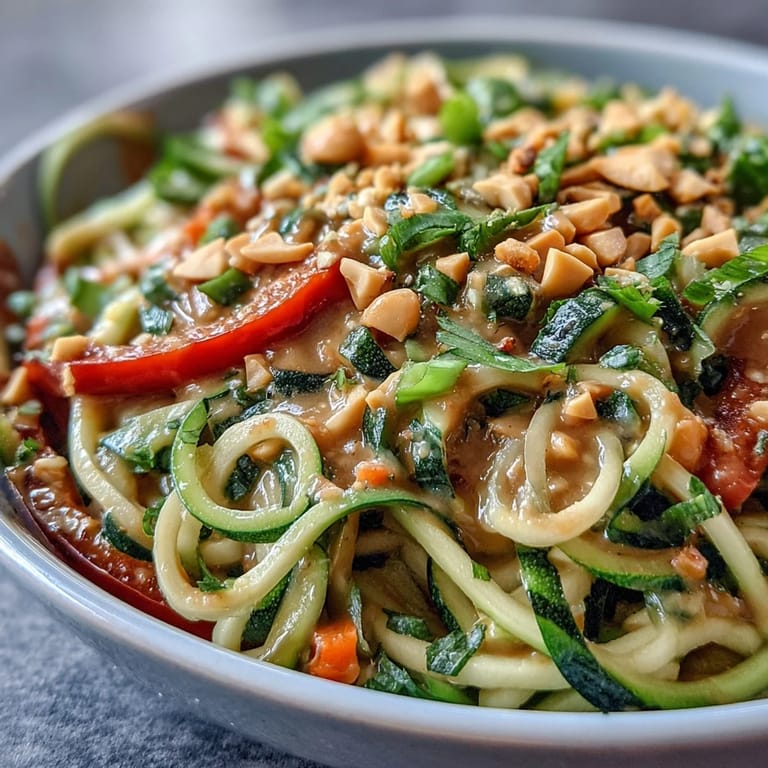
- Serve immediately while the noodles are still warm and the vegetables are at their crispest. Top with chopped peanuts, fresh cilantro, and sliced green onions for texture and brightness.
 Save to Pinterest
 There's something almost meditative about the rhythmic slicing and spiralizing, and then watching all those separate ingredients become one cohesive dish in less time than it takes to make a phone call. It became my go-to weeknight dinner whenever I needed something nourishing without the mental weight of cooking something complicated.
Making the Peanut Sauce Your Own
The beauty of this sauce is how forgiving it is to personal taste. If you like it more tangy, add extra lime juice or rice vinegar; if you prefer sweeter, bump up the maple syrup. I've made versions with almond butter when I was out of peanut butter, and honestly, it was equally delicious with a slightly more delicate flavor. The sesame oil is what gives it that authentic stir-fry depth, so that's the one ingredient I wouldn't skip.
Vegetable Swaps That Work
While the original combination hits all the right notes, this stir-fry is endlessly adaptable depending on what's in your crisper drawer or what you're craving. Broccoli florets, sliced mushrooms, and even thinly sliced cabbage all work beautifully. The cooking time might shift slightly depending on what you choose, so the rule is simple: aim for vegetables that stay somewhat crisp rather than becoming completely soft.
Turning This Into a Protein-Packed Meal
On its own, this is a fresh and light dish, but if you want something more filling, there are easy ways to make it heartier without losing that bright, vibrant quality. Grilled or pan-seared tofu cubes absorb the sauce beautifully, while sliced chicken breast cooks in minutes alongside the vegetables. I've also had success with shrimp, which cooks so quickly that you can add it right at the beginning and it'll be done by the time everything else is.
- Marinate tofu for at least thirty minutes before cooking so it actually tastes like something.
- Cook chicken or shrimp separately first if you're worried about timing, then toss it in at the end.
- For a plant-based protein boost, crispy chickpeas or tempeh work just as well as traditional proteins.
 Save to Pinterest
 This recipe taught me that healthy food doesn't have to be boring or time-consuming, and that sometimes the simplest dishes are the ones you find yourself craving most. I hope it becomes a regular in your rotation the way it has in mine.
Common Questions
- → How do I prevent zucchini noodles from becoming soggy?
Cook zucchini noodles briefly over medium-high heat, just until warmed through, to maintain their texture and avoid sogginess.
- → Can I substitute peanut butter in the sauce?
Yes, almond or cashew butter can be used for a different flavor or to avoid peanuts, adjusting consistency with warm water as needed.
- → What other vegetables work well in this stir-fry?
Snap peas, bell peppers, carrots, mushrooms, or broccoli all complement the zucchini noodles and peanut sauce beautifully.
- → Is this dish suitable for gluten-free diets?
Use tamari instead of soy sauce to keep the dish gluten-free while preserving the savory flavor of the sauce.
- → How can I add extra protein to this dish?
Top with grilled tofu, chicken, or shrimp for added protein and make it more filling.