 Save to Pinterest
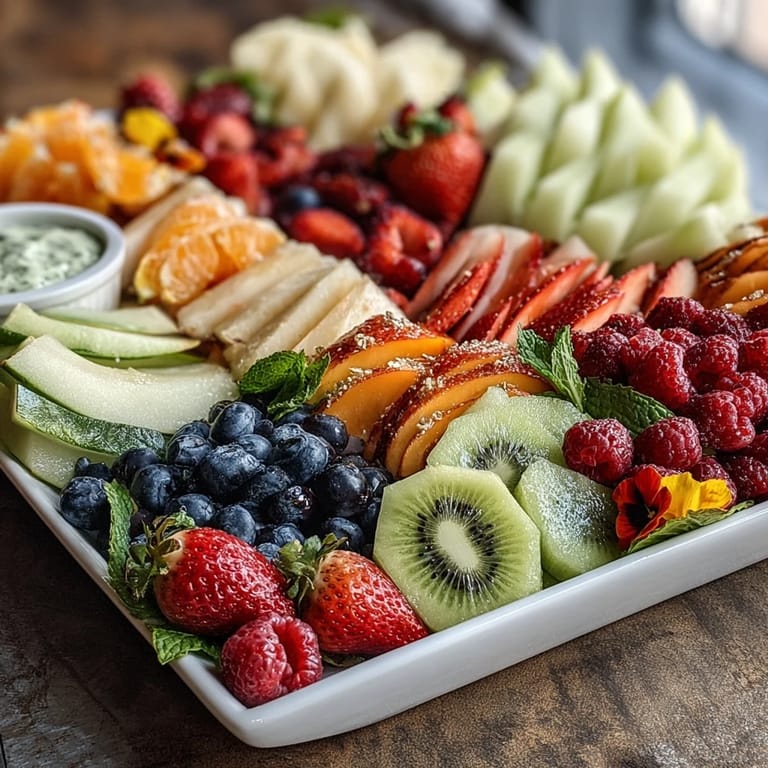
 My friend texted me three days before her daughter's graduation asking if I could help with the party food, and honestly, my first thought was a fruit display—something that wouldn't wilt under the June heat but would still feel celebratory and special. I'd seen those gorgeous fruit tables at weddings, all swooping colors and careful arrangement, and I realized: why not make one for a grad party? The magic isn't in complicated cooking; it's in letting fresh fruit shine and adding those unexpected touches like edible flowers that make people stop and actually look at what they're eating.
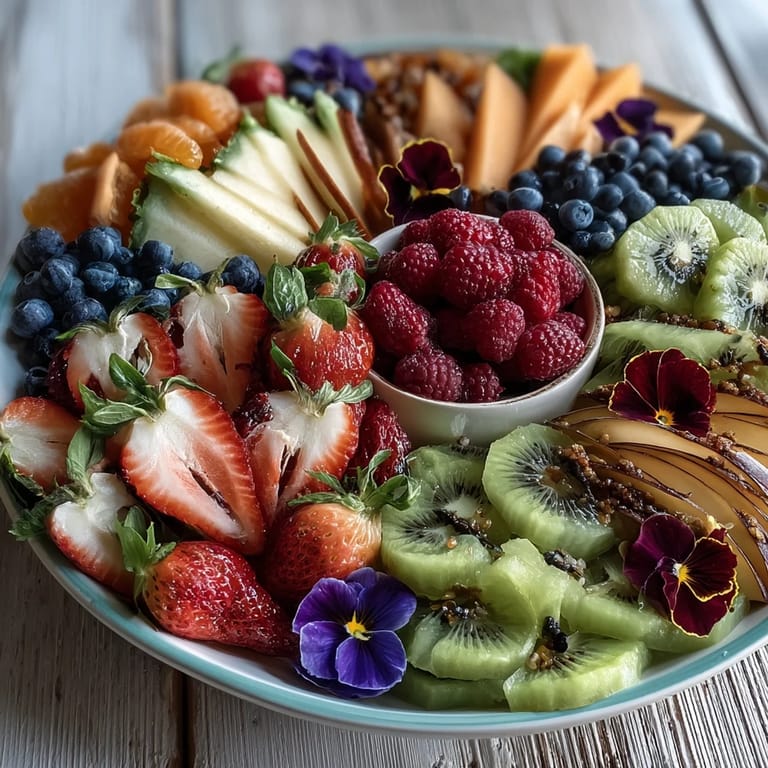
I remember setting up that fruit table at 3 p.m. on a Saturday, and the mom came into the kitchen to grab water and just stopped mid-step. The berries had caught the afternoon light coming through the window, and the whole thing looked like edible stained glass. Her daughter walked by later and didn't even know it was food at first—she thought it was decoration. That moment felt like the whole point of doing something beautiful, even if it was just fruit.
Ingredients
- Seedless green grapes (3 cups): These stay firm longer than red varieties and give you a pale, jewel-like base layer that makes everything else pop.
- Seedless red or black grapes (3 cups): The deep burgundy ones are what catch people's eyes first, so don't skimp on quantity or quality here.
- Strawberries (2 cups, hulled and halved): Fresh strawberries have that bright sweetness that feels summery; halving them lets you nestle them between other fruits for better coverage.
- Pineapple (2 cups, bite-sized pieces): The golden-yellow color is essential for visual contrast, and the slight tartness balances sweeter fruits beautifully.
- Watermelon (2 cups, wedges or balls): Use a melon baller if you want uniform rounds, or cut into small wedges—whichever feels less fussy to you.
- Cantaloupe (2 cups, wedges or balls): The peachy-orange tone is irreplaceable for making the whole display feel warm and inviting.
- Blueberries (2 cups): These tiny gems tuck into gaps and add pockets of deep color; they're also sturdy enough to arrange first without bruising.
- Raspberries (2 cups): Delicate and almost burgundy-purple, these go on last because they bruise if you look at them wrong, but their subtle color is worth the care.
- Kiwis (2, peeled and sliced): The bright green and tiny black seeds provide visual surprise and a tangy contrast to sweeter fruits.
- Oranges (2, peeled and segmented): Citrus segments hold their shape and add a sunny element that feels celebratory without being showy.
- Edible flowers (1 cup, pesticide-free): Pansies, violas, and nasturtiums add genuine elegance; only use certified food-grade flowers, never from a florist.
- Fresh mint leaves (optional): A few scattered leaves freshen the whole display and signal to guests that this is thoughtfully composed.
- Lemon slices (optional): A garnish that also looks sunny and can protect delicate fruits from browning if arranged at the edges.
Tired of Takeout? 🥡
Get 10 meals you can make faster than delivery arrives. Seriously.
One email. No spam. Unsubscribe anytime.
Instructions
- Wash everything thoroughly:
- Even if fruit looks clean, give it a gentle rinse and pat completely dry with paper towels—moisture is what causes browning and wilting later. Edible flowers need special care; rinse them gently and let them air-dry on a clean kitchen towel.
- Prep your fruit like you're preparing a canvas:
- Cut larger fruits into bite-sized pieces or use a melon baller for those round balls of cantaloupe and watermelon. Slice strawberries and kiwis at an angle so they catch light; segment those oranges so they're ready to tuck in.
- Choose your arrangement style and start with the biggest pieces:
- Find a large, clean table or serving board—make sure it's actually stable and won't tip if someone leans on it. You can arrange fruits in colorful sections, stripes, or overlapping patterns; there's no wrong way, so go with what feels balanced to you.
- Layer and build visual rhythm:
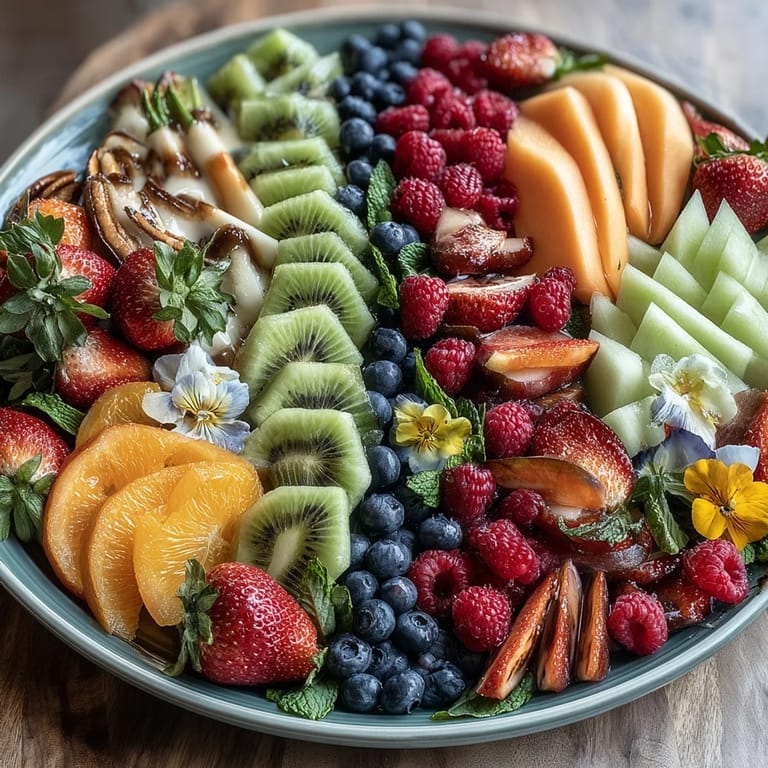
- Start with the blueberries since they're sturdy and won't bruise; use them to fill gaps and create anchor points. Then add bigger pieces—grapes, melon, pineapple—in overlapping clusters that look abundant without being chaotic.
- Add the delicate touches last:
- Tuck raspberries in near the end because they're fragile; weave mint leaves through clusters for freshness and color. Scatter edible flowers last so they stay as pretty as possible, positioning them where they frame other fruits rather than hiding them.
- Garnish and chill:
- If you're using lemon slices, arrange them around the perimeter—they look fresh and protect other fruits from browning. Keep everything chilled until just before serving; if you arrange it more than 30 minutes early, the fruit starts looking tired.
 Save to Pinterest
 What struck me most that afternoon wasn't just how beautiful the table looked, but how people actually ate from it differently than they would have from bowls. Someone held up a strawberry to admire the color before eating it. Kids were genuinely delighted by the edible flowers and felt fancy picking them. Food stopped being fuel and became part of the celebration itself, which is maybe all any of us are really trying to do when we feed people we care about.
Choosing Fruits by Season
The recipe I've given you works beautifully in summer, but don't be afraid to swap fruits based on what's actually ripe and affordable where you live. In spring, add fresh cherries and strawberries; in fall, use grapes and apples (toss apple slices in a bit of lemon juice so they don't brown); in winter, lean on citrus fruits and pomegranate seeds. The visual principle stays the same—you want a range of colors from pale to deep, and you want a mix of textures and sweetness levels.
Setting Up Like a Pro
Use a serving board or table that's actually stable and at a comfortable height for guests to reach—counter height is usually better than a tall cocktail table because people can actually grab fruit without reaching awkwardly. Make sure your surface is completely clean and dry before you start; any moisture underneath will make your arrangement slide around. If you're worried about fruit rolling or slipping, you can place a damp kitchen towel under the board to keep it from sliding, but keep that towel hidden so it doesn't affect the presentation.
Beyond the Basics
If you want to elevate this further without adding actual cooking, consider offering a simple honey-yogurt dip (or dairy-free coconut yogurt dip) on the side in a small bowl. A squeeze bottle of dark chocolate drizzle looks stunning on grapes, and candied mint leaves add sophistication if you have time. Some people like to add edible gold leaf or pearl dust, though honestly, I think fresh fruit doesn't need much—it's already beautiful.
- Make sure any dips or drizzles you add are also vegan and allergen-friendly if your guests require that.
- Arrange fruit no more than 30 minutes before serving to keep everything looking fresh and vibrant.
- Keep a small spray bottle of water nearby to mist the display right before guests arrive if anything looks tired.
 Save to Pinterest
 A fruit table is the kind of thing that looks effortless but actually requires just enough attention to feel intentional—and that's what makes it perfect for a celebration. You're not spending hours in the kitchen, but you're still creating something beautiful and memorable that tastes like summer itself.
Common Questions
- → Which fruits work best for a colorful fruit table?
Fruits such as grapes, strawberries, pineapple, watermelon, cantaloupe, blueberries, raspberries, kiwis, and oranges provide vibrant colors and varied textures.
- → How should edible flowers be handled before use?
Only use pesticide-free, food-grade edible flowers. Rinse gently and pat dry before adding to the display to ensure freshness and safety.
- → What are tips for arranging the fruit table attractively?
Create overlapping sections or patterns with the fruits, interspersed with edible flowers and fresh mint leaves for color contrast and visual appeal.
- → Can this fruit table be prepared in advance?
Arrange the fruit shortly before serving to maintain freshness and prevent wilting, and keep chilled until presentation.
- → Are there any optional garnishes to enhance the display?
Fresh mint leaves and lemon slices can be added for fragrance and a pop of complementary color.