 Save to Pinterest
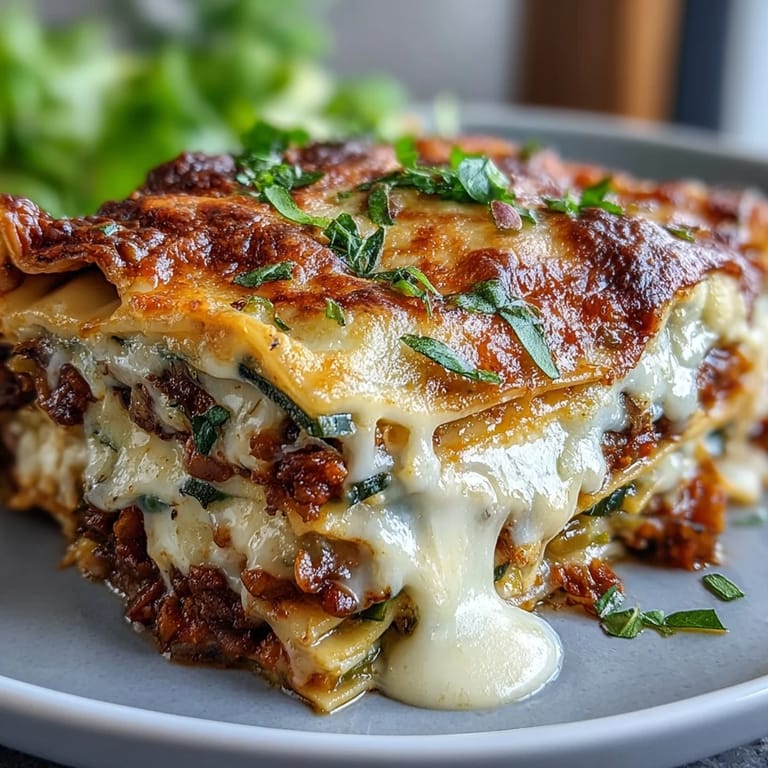
 There's something magical about the moment you realize a vegetable-forward dish doesn't need meat to feel substantial—it happened for me on a rainy Tuesday when I had mushrooms, lentils, and the tail end of a courgette situation in my fridge. I layered them into one pan with a silky béchamel and no-boil sheets, and what emerged was this deeply savory, smoky lasagne that made everyone forget to ask where the meat was. That pan became my favorite shortcut: all the comfort of traditional lasagne without the fuss of multiple pots or the guilt of a three-hour cook time.
I made this for my neighbor who'd just moved in next door, and she ate three servings while we talked about her new job and the strange plumbing situation in her kitchen. The way her whole face softened after that first bite told me everything I needed to know—comfort food doesn't care about your definition of vegetarian or carnivore, it just wants to be part of your story.
Ingredients
- Olive oil: Use a good quality one here since it's building the foundation of your sauce, and it actually shows in the flavor.
- Onion and garlic: Chopped fine so they melt into the base rather than announcing themselves in every bite.
- Carrot, red bell pepper, mushrooms, and courgettes: This medley gives you different textures and sweetness levels that balance the smokiness beautifully.
- Smoked paprika: The secret weapon—don't use regular paprika thinking it's the same thing, because it isn't, and this is where the whole soul of the dish lives.
- Dried oregano and thyme: They work together to add an earthy backbone without overpowering the delicate vegetables.
- Chili flakes: Optional but I always add a pinch because a whisper of heat makes everything taste more intentional.
- Tomato paste: A tablespoon of concentrate adds depth that fresh tomatoes alone can't quite manage.
- Chopped tomatoes: Use canned good quality ones rather than fresh—the acidity in canned balances the earthiness perfectly.
- Soy sauce: Just a tablespoon adds umami that makes people ask what's in here, then look surprised when you tell them.
- Red lentils: Rinse them well or they'll turn your sauce gluey instead of creamy, and cook them in the sauce so they absorb all the flavors.
- Vegetable stock: Use a good one because this is basically the blood of your sauce.
- Unsalted butter and flour: Your béchamel base, and the proportion matters—too thick and it's paste, too thin and it won't support the layers.
- Whole milk: Warmer milk whisks in more smoothly than cold, cutting down on lumpy frustration.
- Ground nutmeg: A quarter teaspoon in béchamel is the detail that separates homemade from something from a box.
- Mature cheddar or vegetarian hard cheese: Go for something with actual flavor rather than bland alternatives—your sauce deserves it.
- No-boil lasagne sheets: These are the reason this whole thing works in one pan, so don't skimp on the quality.
- Mozzarella for topping: It needs to melt and brown, so fresh mozzarella won't do here—choose something that actually crisps up.
- Fresh basil: A finishing touch that's completely optional but transforms the whole thing if you have it.
Tired of Takeout? 🥡
Get 10 meals you can make faster than delivery arrives. Seriously.
One email. No spam. Unsubscribe anytime.
Instructions
- Heat your pan and build your base:
- Get your large ovenproof skillet hot over medium heat with olive oil, then add onion and garlic, letting them soften for about two minutes until they smell like something important is happening. You're not rushing this—you're listening to the sizzle and waiting for that moment when raw garlic smell shifts into something sweeter.
- Add the vegetables and let them mingle:
- Throw in carrot, pepper, mushrooms, and courgettes, cooking for five to six minutes until they start releasing moisture and softening at the edges. The pan should smell incredible now—earthy and sweet—which means you're on the right track.
- Wake up the spices and paste:
- Stir in your smoked paprika, oregano, thyme, chili flakes, and tomato paste, cooking everything together for just a minute so the spices bloom and the paste darkens slightly. This is where the magic flavor starts building.
- Simmer the sauce into something thick and glossy:
- Add tomatoes, soy sauce, rinsed lentils, and stock, bring to a gentle bubble, then cover and let it sit for fifteen to twenty minutes, stirring occasionally, until the lentils soften and the sauce thickens. You'll know it's ready when you drag a spoon through it and the path holds for a moment before filling back in.
- Make your béchamel while the sauce cooks:
- Melt butter in a separate medium pan, whisk in flour smoothly, then very gradually add milk while whisking constantly so you don't end up with lumps. Cook for about five minutes, stirring regularly, until it coats the back of a spoon, then remove from heat and stir in nutmeg and cheese.
- Set your oven and arrange your layers:
- Preheat to 200°C (180°C fan, 400°F, Gas 6), then divide your bolognese in half—remove one half and set it aside, leaving the other half in the pan as your first layer. You're creating a puzzle now, and you want to visualize it before you start.
- Build the lasagne layers thoughtfully:
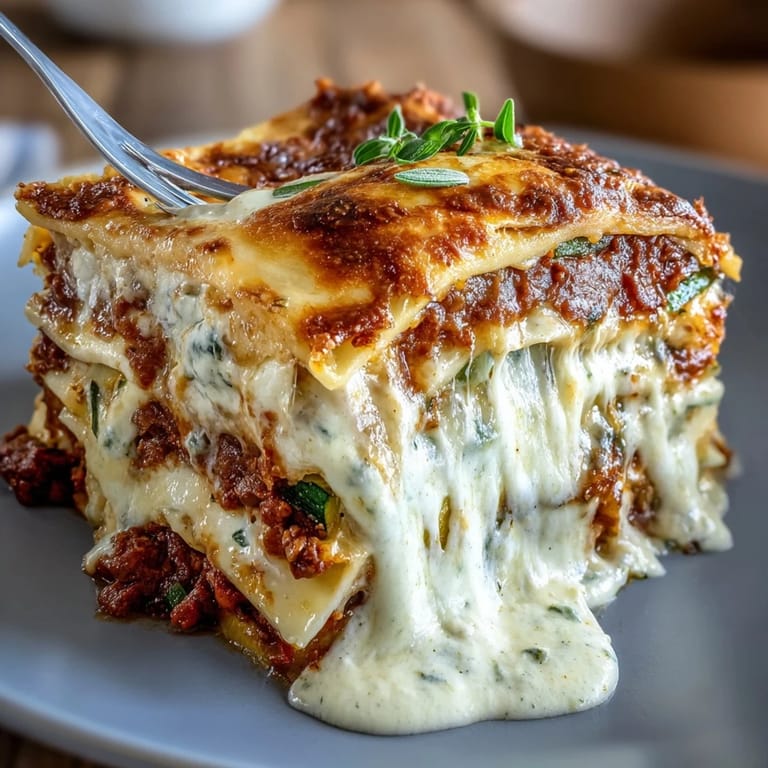
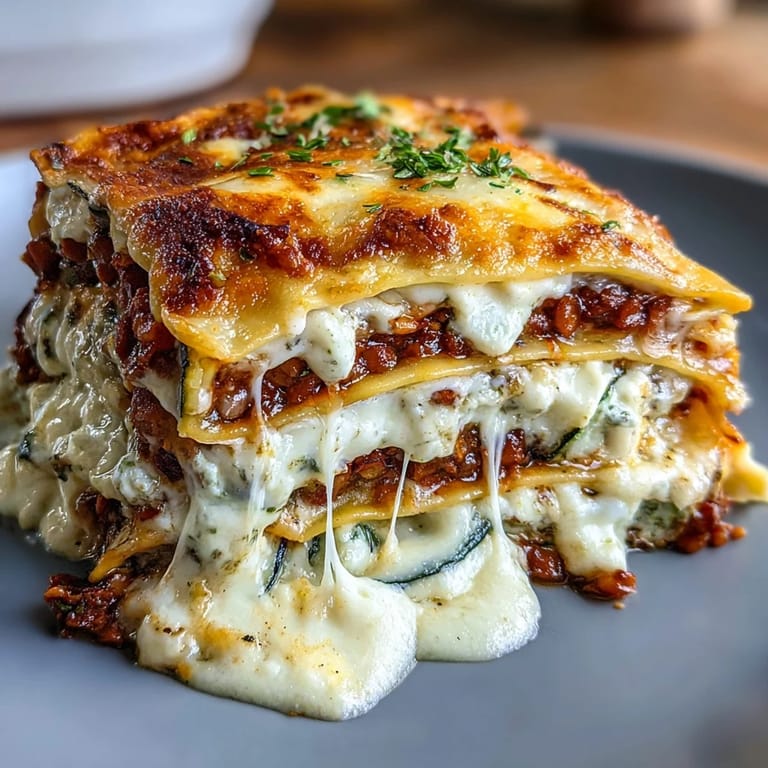
- Spread one-third of béchamel over the remaining sauce in the pan, break lasagne sheets to fit on top, then add half your reserved bolognese, another third of béchamel, another layer of sheets, then the rest of the bolognese, final sheets, and final béchamel. Finish with grated mozzarella on top.
- Bake covered, then uncovered:
- Cover the pan loosely with foil and bake for twenty-five minutes to let everything heat through gently, then remove foil and bake another ten to fifteen minutes until the top is golden and bubbling around the edges. The whole kitchen will smell like an Italian restaurant by now.
- Rest before cutting:
- Let it sit for ten minutes—this is non-negotiable because it lets the layers set so you can actually cut a slice instead of serving lasagne soup. Use this time to make a simple salad or pour wine.
 Save to Pinterest
 What struck me most about this dish was watching someone who'd spent years saying lentils were boring actually go back for seconds, then thirds, then ask for the recipe written down. That's when I realized this isn't really about replacing meat—it's about respecting vegetables enough to cook them properly, give them flavor, and let them be the whole story.
Why Smoked Paprika Changes Everything
The first time I made this without smoked paprika, thinking regular paprika was a reasonable substitute, I ended up with something that tasted pleasant but forgettable—like someone had whispered the recipe rather than announced it. That next time, when I used smoked paprika and actually tasted the difference, I understood why it's worth seeking out. It adds a depth that makes people lean back from their plate and ask what gives it that incredible warmth, and then you get to say, casually, 'oh, it's just paprika,' which feels like a small magic trick every time.
Making This Pan Yours
The beauty of cooking in one pan is that you can actually see what's happening and adjust as you go—if your sauce looks too thin, let it simmer uncovered for an extra few minutes; if it's thickening too much, splash in a bit more stock. I've made this with extra mushrooms when I forgot to buy the pepper, swapped the courgettes for spinach when that's what needed using, and even added a glug of red wine on nights when I wanted it to feel more special. Your vegetables don't have to match mine exactly, just aim for roughly the same amount of chopped vegetables and everything works out.
Serving and Storage Wisdom
This lasagne is almost better the next day when the flavors have had time to get comfortable with each other, so making it ahead is actually a win rather than a shortcut. It keeps beautifully covered in the fridge for three days, and reheats gently covered with foil in a 180°C oven for about twenty minutes until warmed through. You can also freeze individual portions wrapped tightly, and they'll last about three months if you actually remember what's in your freezer—though honestly, something this good rarely makes it that long.
- Pair it with something fresh like a sharp green salad or garlic bread, because the lasagne is rich and you want contrast on the plate.
- A good quality Parmesan for grating at the table adds a final flourish that feels generous without requiring extra work.
- If you're going vegan, the swap is straightforward—dairy-free butter, plant-based milk, and vegan cheese work perfectly, and honestly no one will notice the difference.
 Save to Pinterest
 This lasagne somehow became the dish I make when I want to feel like I've actually cooked something impressive, even though it's remarkably forgiving and honest. It's turned vegetable skeptics into people who ask for seconds, and it's proven that comfort food doesn't need apologies—just good intentions and smoked paprika.
Common Questions
- → Can I make this vegan?
Yes, substitute dairy-free butter and plant-based milk for the béchamel, and use vegan cheese. The result remains creamy and satisfying.
- → What type of pan works best?
A large, deep ovenproof skillet or frying pan is essential. It needs to accommodate multiple layers and transfer safely from stovetop to oven.
- → Can I prepare this ahead?
Assemble the entire dish up to 24 hours in advance, cover tightly, and refrigerate. Add 5-10 minutes to baking time if cooking from cold.
- → Why use no-boil lasagne sheets?
No-boil sheets absorb moisture from the sauce during baking, becoming perfectly tender. They also save time and hold layers together better than pre-boiled pasta.
- → What gives the sauce its smoky flavor?
Smoked paprika is the key ingredient. Don't omit it—you can also add a splash of red wine for extra depth if desired.